
THE HISTORY
BEHIND VISUALIZATION MANAGEMENT™
Harry Beck’s solution illustrates a central idea of Visualization Management™:
Make complexity understandable without losing what matters.
Henry Charles “Harry” Beck (1902–1974)
The electrical draughtsman who transformed complexity into clarity.
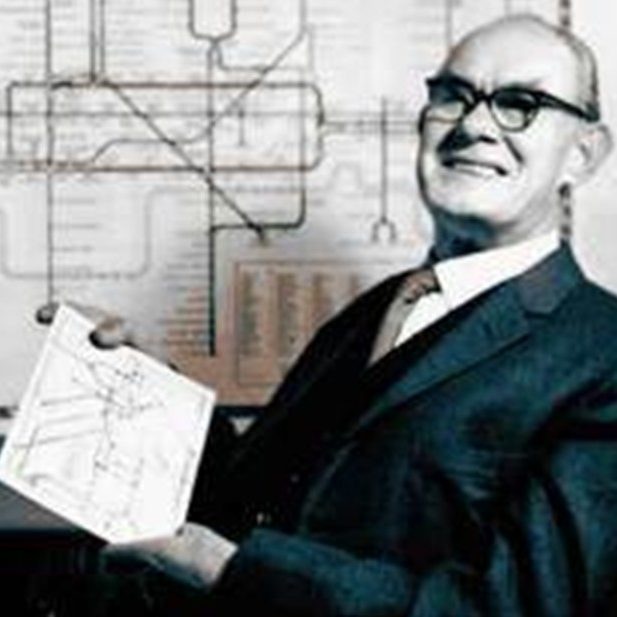
Early London Underground maps attempted to represent the network geographically. Although accurate, the growing number of lines and stations made them increasingly difficult to understand.
In 1931, electrical draughtsman Henry Charles “Harry” Beck developed a radically different approach. Inspired by electrical circuit diagrams, he reduced geographical accuracy and focused on what passengers actually needed:
- lines and connections
- station sequences
- interchange points
- clear orientation
Using horizontal, vertical and 45-degree lines, Beck transformed a complex transport network into a clear and practical visual structure. His diagrammatic Tube map was first published in 1933 and became a model for transport maps around the world.
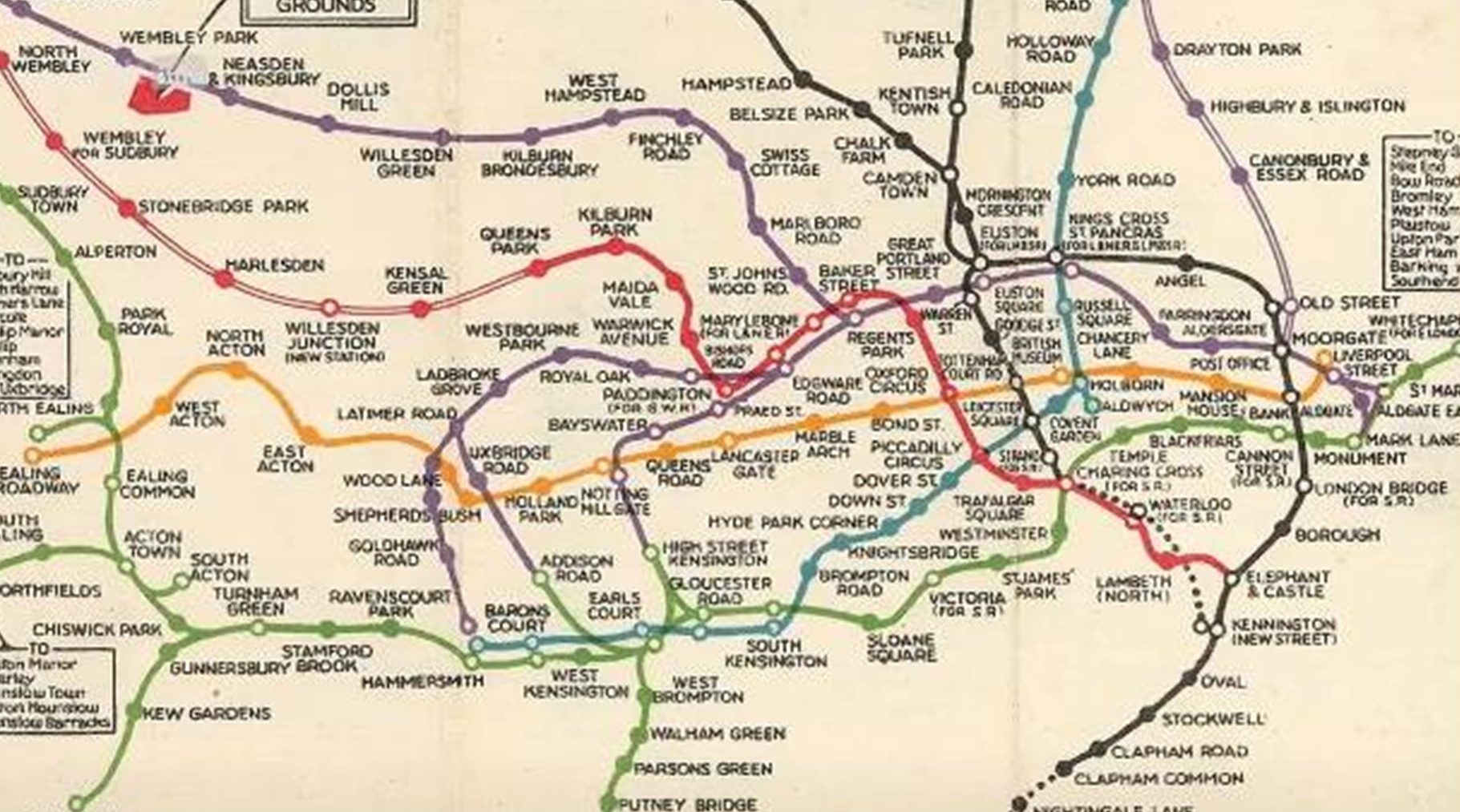
Geographical London Underground Map, 1926
Accurate—but increasingly difficult to navigate.
THE PRINCIPLE FOR VISUALIZATION MANAGEMENT™
A visualization does not have to reproduce every detail of reality. It must preserve the relationships and information required for understanding and decision-making.
This approach provides:
- as much overview as possible
- as much detail as necessary
- additional information when required
- a shared picture for different participants
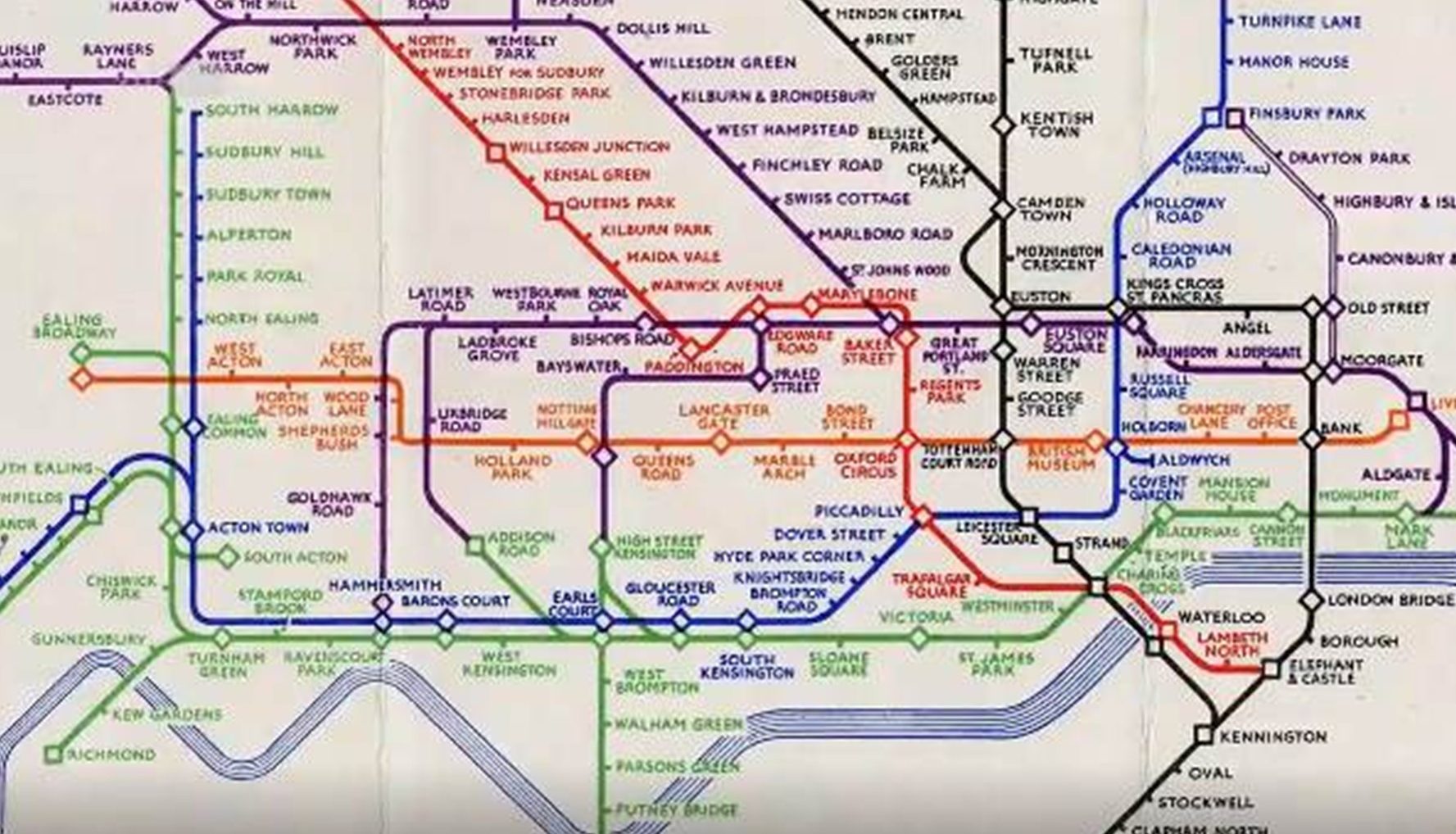
Diagrammatic London Underground Map
Relationships and connections take priority over geographical accuracy.